Early Years Foundation Stage
"When we give every child the best start in their early years, we give them what they need today. We also set them up with every chance of success tomorrow."
Development Matters, 2020
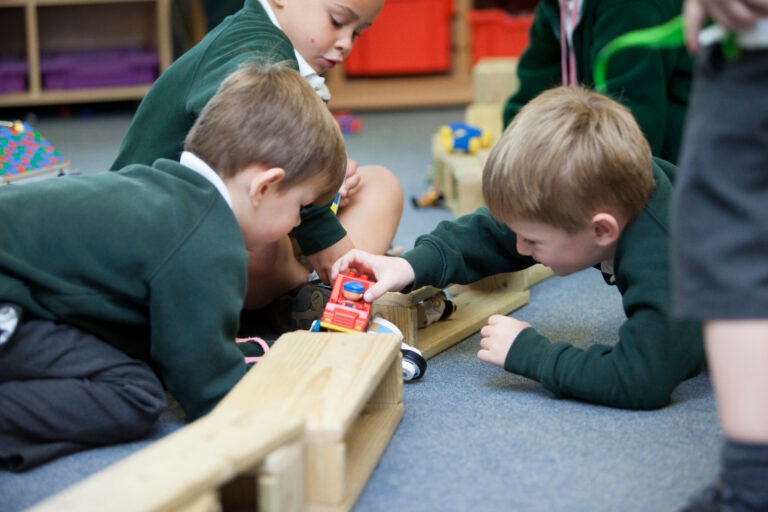 At Sarratt C of E School our curriculum incorporates everything we want the children to experience, learn and be able to do. It meets all the requirements of the educational programmes in the Statutory Framework for the Early Years Foundation Stage (EYFS) and has the flexibility to allow us to respond quickly to children’s new interests and/or needs. The intent for our children is for them to enter the next stage of their education ready to tackle new challenges with confidence and a positive mindset.
The Seven Areas of Learning
Your child will be learning skills, acquiring new knowledge and demonstrating their understanding through 7 interconnected areas of learning and development.
Children should mostly develop the 3 prime areas first.
These are:
- Communication and Language
- Personal, Social and Emotional Development
- Physical Development
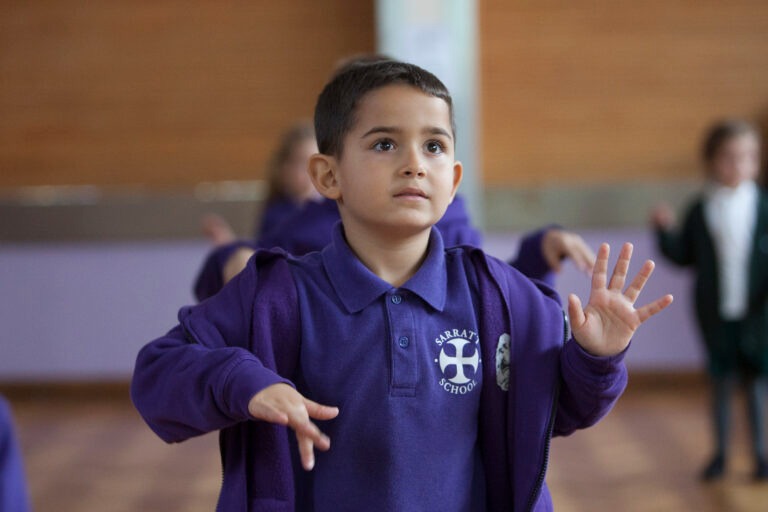
These prime areas are those most essential for your child’s healthy development and future learning.
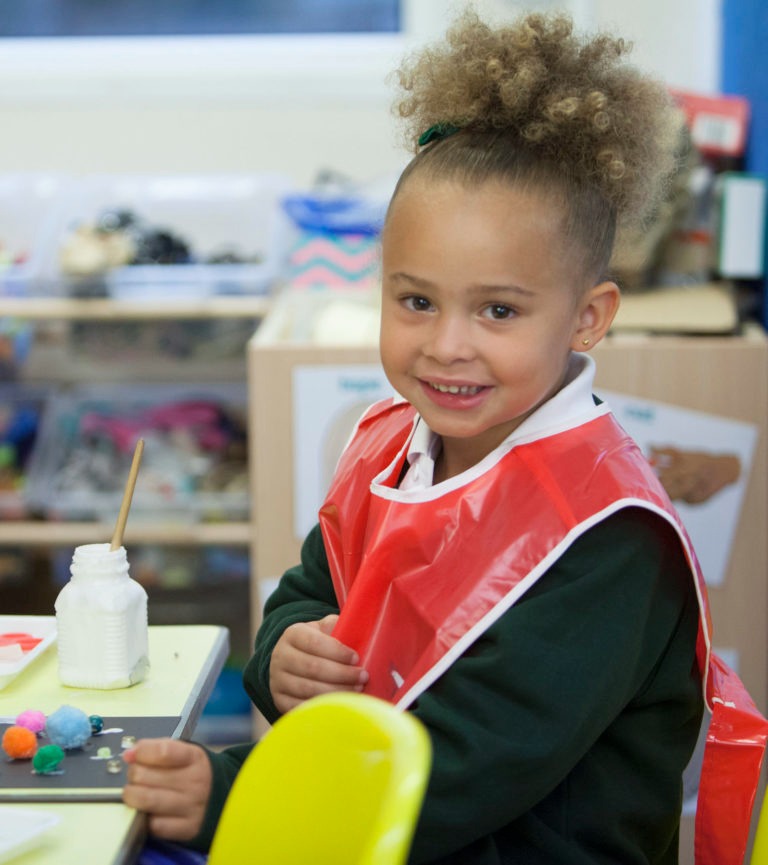 As children grow, the prime areas will help them to develop skills in 4 specific
areas.
These are:
- Literacy
- Mathematics
- Understanding the World
- Expressive Art and Design
These 7 areas are used to plan your child’s learning and activities. At Sarratt C of E School, our experienced EYFS teaching team ensure that tasks and challenges are suited to your child’s unique needs and interests.
“Enabling environments ‘mobilise the energy, attention, curiosity and focus of children”.
Howard Gardener
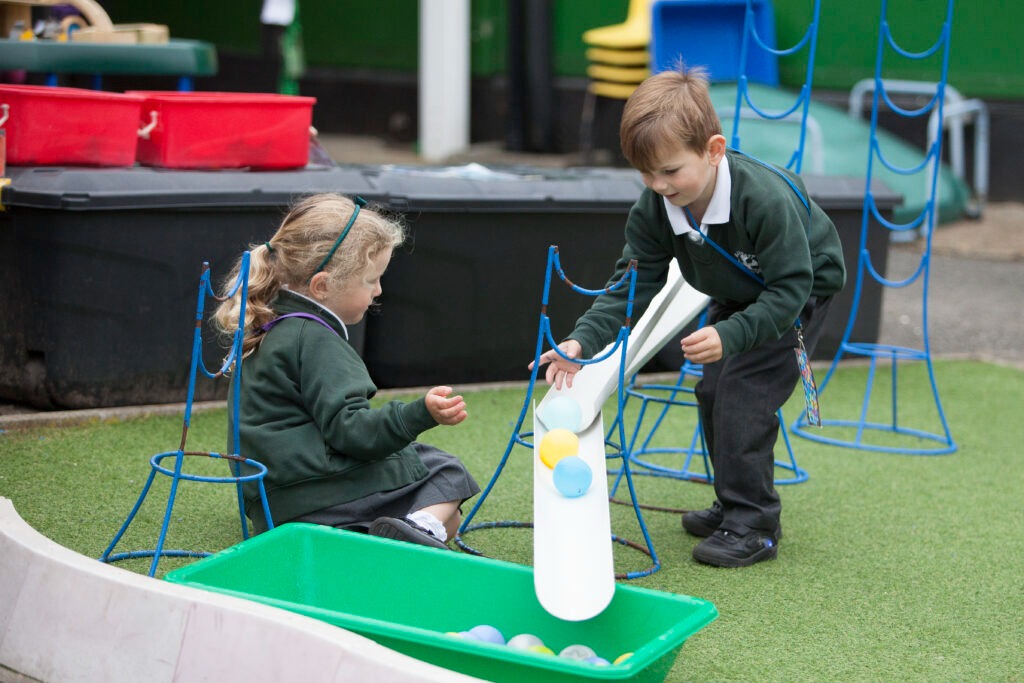
Children in the EYFS learn by playing and exploring, being active, and through creative and critical thinking. Our environment, indoors and outdoors, is continually enhanced with resources designed to scaffold and maximise learning.
Phonics and Reading Curriculum
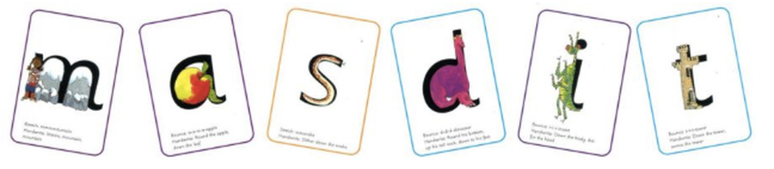
At Sarratt C of E Primary School we use a synthetic phonics programme to teach reading called ‘Read Write Inc.’‘ produced by Ruth Miskin.
Read Write Inc. phonics is a method of teaching reading which is centred around learning the sounds of the letters (phonics), and then blending them together to individual sounds in order to write them.
How it works
RWI is taught throughout Reception and Year 1, continuing into Year 2 for children who remain on the programme. The children are assessed and work at a level that is appropriate.
Storybooks and non-fiction texts are closely matched to the group’s development.
The children will be regularly assessed to check they have made progress and will be moved on as is necessary.
The 5 Key Principles of Read Write Inc.
- Purpose– know the purpose of every activity and share it with the children, so they know the one thing they should be thinking about
- Participation– ensure every child participates throughout the lesson. Partnership work is fundamental to learning
- Praise- ensure children are praised for effort and learning, not ability
- Pace- teach at an effective pace and devote every moment to teaching and learning
- Passion- be passionate about teaching so children can be engaged emotionally.read words. The children also learn to break down (segment) words into
Please find the below parent guide and presentation slides from our Parent Workshop: